

The first heavy rains of the monsoon bring much-needed relief from Kerala’s summer heat. But while homeowners welcome the cooler weather, another unwanted visitor becomes more active, cockroaches.
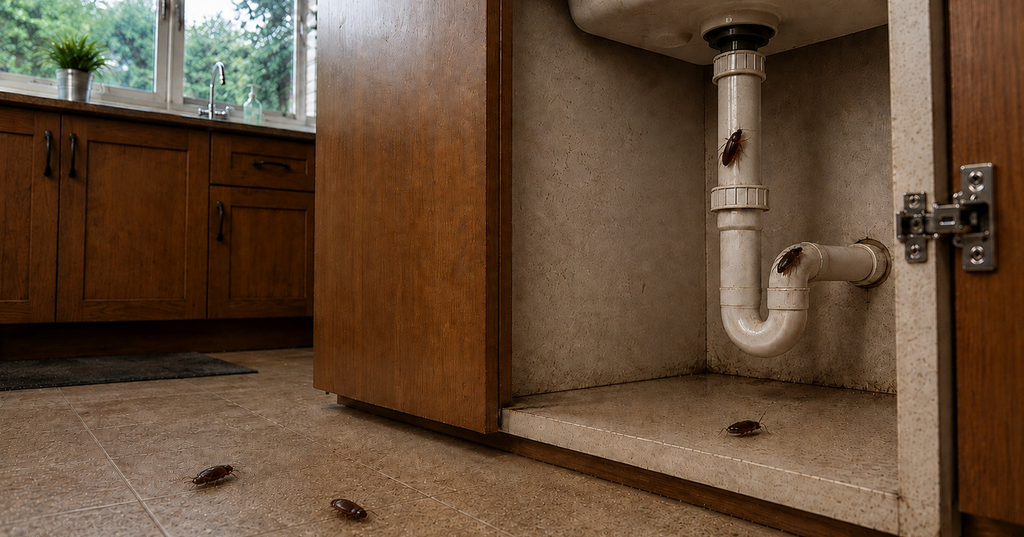
Many people notice an increase in cockroach activity during the rainy season. They suddenly appear in kitchens, bathrooms, cupboards, drains, and even bedrooms. You might spot one or two at first, only to find dozens a few weeks later.
This isn’t a coincidence.
The combination of heavy rainfall, high humidity, warm temperatures, and abundant food sources creates the perfect environment for cockroaches to breed and spread rapidly. By the time you start seeing them regularly, the infestation has often been growing unnoticed for weeks.
Having worked with homeowners across Kerala for over 25 years, we’ve found that monsoon is one of the busiest seasons for cockroach complaints. Most infestations don’t start overnight. They develop gradually because the conditions inside many homes become ideal for cockroaches to survive and reproduce.
In this guide, you’ll learn why cockroach infestations increase during Kerala’s monsoon, how to identify the early warning signs, and what you can do before a small problem turns into a major infestation.
Why Does Kerala’s Monsoon Increase Cockroach Activity?
Cockroaches have survived for millions of years because they adapt quickly to changing environments.
Kerala’s monsoon provides almost everything they need:
- Moisture
- Warm temperatures
- Shelter
- Food
- Dark hiding places
When these conditions come together, cockroach populations grow much faster than during the dry season.
Let’s look at the main reasons why.
1. Heavy Rain Forces Cockroaches Indoors
One of the biggest reasons homeowners notice more cockroaches during the monsoon is simple.
Heavy rain floods drains, sewers, underground pipelines, and outdoor hiding places.
When their nests become waterlogged, cockroaches begin searching for dry shelter.
Your home offers exactly what they’re looking for.
They commonly enter through:
- Kitchen drains
- Bathroom drains
- Utility rooms
- Plumbing gaps
- Cracks around doors
- Window frames
- Ventilation openings
Many homeowners believe cockroaches suddenly “appear” after rain.
In reality, the rain simply pushes them out of their outdoor shelters and into nearby buildings.
Expert Insight
After continuous rainfall, we frequently find increased cockroach activity in apartments where drain openings are left uncovered or pipe entry points aren’t properly sealed.
2. High Humidity Creates Ideal Breeding Conditions
Cockroaches thrive in humid environments.
Kerala experiences high humidity throughout much of the year, but during the monsoon, moisture levels increase even further.
Areas that become attractive breeding sites include:
- Under kitchen sinks
- Behind refrigerators
- Inside cabinets
- Laundry rooms
- Bathroom corners
- Store rooms
- False ceilings
Moisture also softens cardboard, paper, and organic materials, making them ideal hiding places.
Unlike many insects, cockroaches don’t need large amounts of water.
Even a slow plumbing leak or damp cabinet can support an active population.
3. Food Is Easier to Find During the Monsoon
Cockroaches are opportunistic feeders.
Even the cleanest homes produce enough food to attract them.
Some common food sources include:
- Rice grains
- Bread crumbs
- Cooking oil residue
- Pet food
- Vegetable scraps
- Food waste in bins
- Dirty dishes left overnight
Humidity also causes organic waste to decompose faster, producing stronger odours that attract cockroaches from surrounding areas.
This is why kitchens often become the centre of an infestation.
A single female German cockroach can produce hundreds of offspring during her lifetime.
When food, moisture, and shelter are all available, populations can increase surprisingly quickly.
4. They Prefer Dark, Undisturbed Spaces
Cockroaches are nocturnal insects.
During the day, they hide in places that are:
- Warm
- Dark
- Humid
- Undisturbed
Common hiding places include:
- Behind kitchen cabinets
- Under appliances
- Inside electrical equipment
- Wall voids
- Storage shelves
- False ceilings
- Cardboard boxes
Because they remain hidden during daylight hours, homeowners often underestimate the size of the infestation.
If you regularly see cockroaches during the day, it usually indicates that the population has grown so large that hiding spaces are becoming overcrowded.
That’s often a sign of a significant infestation requiring professional treatment.
Expert Insight
Seeing one cockroach during the daytime should never be ignored. In many cases, it suggests dozens or even hundreds are hidden nearby.
It is worth noting that the species matters as much as the number. Small striped German cockroaches living inside kitchen cabinets and appliances behave very differently from the large reddish American cockroaches that enter from drains, and the two require different treatment. Our cockroach control service page explains how we distinguish between them during inspection.
Early Signs of a Cockroach Infestation
The earlier you identify an infestation, the easier it is to control.
Unfortunately, many homeowners don’t recognize the warning signs until cockroach numbers have increased significantly.
Watch for these early indicators.
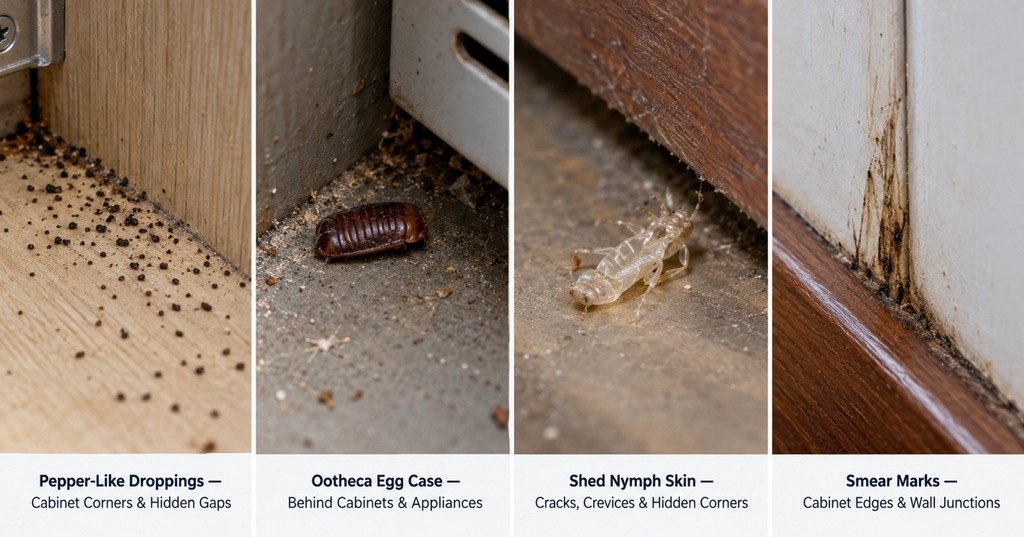
Small Black Droppings
Cockroach droppings resemble black pepper or coffee grounds.
They’re commonly found:
- Inside drawers
- Along cabinet corners
- Under sinks
- Behind appliances
- Near food storage areas
Finding these droppings usually indicates regular cockroach activity nearby.
Unpleasant Musty Odour
Larger infestations often produce a distinctive musty smell.
This odour comes from secretions released by cockroaches as they communicate with one another.
If your kitchen develops a persistent unpleasant smell despite regular cleaning, cockroaches may be hiding nearby.
Egg Cases (Oothecae)
Female cockroaches produce protective egg capsules called oothecae.
Depending on the species, each capsule can contain dozens of developing cockroaches.
These are often found:
- Behind refrigerators
- Under cupboards
- Inside storage cabinets
- Near electrical appliances
Finding even one egg case means the infestation is already reproducing.
Cockroaches After Switching On the Kitchen Light
This is one of the most recognizable warning signs.
If cockroaches immediately scatter when you enter the kitchen at night and turn on the light, they’re already comfortable living inside your home.
By this stage, the infestation is usually well established.
Why DIY Sprays Often Fail
One of the biggest misconceptions is that seeing fewer cockroaches after spraying means the infestation has been eliminated.
In reality, most household aerosol sprays only kill the cockroaches that are visible.
They rarely reach:
- Hidden nests
- Egg capsules
- Wall voids
- Drain systems
- Cabinet crevices
Within a few weeks, newly hatched cockroaches often replace the ones that were killed.
This creates the impression that “the treatment didn’t work.”
Professional cockroach management focuses on eliminating the entire infestation, not just the insects you can see.
Expert Insight
We’ve visited many homes where repeated use of household sprays actually made professional treatment more difficult because the cockroaches simply relocated deeper into wall voids and inaccessible hiding places.
How to Prevent Cockroaches During Kerala’s Monsoon
Preventing a cockroach infestation is far easier and less expensive than eliminating an established population. While Kerala’s climate naturally attracts cockroaches during the rainy season, a few proactive measures can significantly reduce the risk.
Eliminate Moisture Wherever Possible
Moisture is one of the biggest reasons cockroaches survive indoors.
Inspect your home regularly for:
- Leaking kitchen pipes
- Dripping taps
- Damp cabinets
- Water collecting under sinks
- Bathroom leaks
- Water around washing machines
Even a small leak can provide enough moisture to support an active cockroach population.
Persistent damp is also the condition that drives termite activity in the same season, which is why the two problems so often appear in the same house during monsoon. Our guide to why termite problems increase in Kochi homes during the monsoon covers that connection.
Store Food Properly
Cockroaches are excellent scavengers.
They don’t need large amounts of food to survive.
Simple habits can make a significant difference:
- Store dry food in airtight containers.
- Clean kitchen countertops after cooking.
- Avoid leaving dirty dishes overnight.
- Sweep food crumbs daily.
- Empty kitchen bins regularly.
- Keep pet food covered when not in use.
Reducing available food sources makes your home less attractive to cockroaches.
Keep Drains Clean
Kitchen and bathroom drains are among the most common entry points during Kerala’s monsoon.
Clean drains regularly and consider using drain covers, especially during periods of heavy rainfall.
If you notice cockroaches emerging from drains repeatedly, the infestation may already be established within the drainage system.
Seal Entry Points
Cockroaches can squeeze through surprisingly small openings.
Inspect your home for:
- Gaps around plumbing
- Cracks in walls
- Spaces beneath doors
- Openings around electrical conduits
- Damaged window seals
Sealing these access points reduces the number of cockroaches entering from outside.
Reduce Clutter
Stacks of newspapers, cardboard boxes, unused containers, and cluttered storage rooms provide excellent hiding places.
Keeping storage areas clean and organized makes it much harder for cockroaches to establish breeding sites.
Why Professional Cockroach Treatment Is More Effective
Many homeowners try household sprays before contacting a pest control company.
While these products may kill a few visible cockroaches, they rarely solve the actual problem.
Professional cockroach management follows a systematic approach.
Step 1: Detailed Inspection
Technicians identify:
- Cockroach species
- Breeding locations
- Entry points
- Moisture sources
- Infestation severity
Without this information, treatment becomes guesswork.
Step 2: Targeted Treatment
Professional treatment may include:
- Gel bait application
- Crack and crevice treatment
- Residual insecticides where appropriate
- Drain treatments
- Monitoring
These methods target hidden cockroach populations instead of only those visible on the surface.
Step 3: Preventive Recommendations
Professional pest control doesn’t end after treatment.
Technicians also recommend practical changes to reduce the likelihood of future infestations.
One point worth stressing: if a technician has applied gel bait in your kitchen, do not spray insecticide in the same area afterwards. Spray residue contaminates the bait and repels cockroaches from it, which is one of the most common reasons a professional treatment underperforms.
Full details of our approach are on the cockroach control services page.
Expert Insight
One of the biggest differences between DIY treatment and professional pest management is that professionals focus on eliminating the breeding population, not simply reducing the number of visible cockroaches.
Common Mistakes Homeowners Make
Many cockroach infestations become worse because of a few common mistakes.
Waiting Too Long
Seeing one or two cockroaches may seem harmless, but populations can grow rapidly during the monsoon.
Depending Only on Aerosol Sprays
Surface sprays rarely eliminate hidden nests or egg capsules.
Ignoring Small Water Leaks
Persistent moisture allows cockroaches to survive even when food is limited.
Leaving Food Out Overnight
Dirty dishes, uncovered food, and overflowing bins attract cockroaches every night.
Blocking Visible Cockroaches Without Finding the Source
Killing individual cockroaches doesn’t eliminate the infestation.
Finding and treating the breeding site is essential.
If you are weighing up providers, our guide to the 7 questions to ask before hiring a pest control company in Kerala covers what a follow-up schedule should look like and why single-visit promises contradict cockroach biology.
When Should You Call a Professional?
It’s time to contact a professional pest control company if you notice:
- Cockroaches every night
- Cockroaches during the daytime
- Egg cases inside cupboards
- Droppings around food storage areas
- A strong musty smell
- Cockroaches repeatedly returning after DIY treatments
- Infestations spreading to multiple rooms
The earlier professional treatment begins, the easier it is to eliminate the infestation before it becomes widespread.
Why Kerala Homeowners Choose APCO
Cockroach infestations are one of the most common pest problems we encounter during Kerala’s monsoon.
Our approach focuses on identifying the root cause of the infestation rather than simply treating the visible symptoms.
Every service begins with a thorough inspection, followed by a customized treatment plan based on:
- Type of cockroach
- Infestation level
- Property layout
- High-risk breeding areas
- Long-term prevention requirements
Whether you live in an apartment, villa, or independent house, our goal is to provide effective, long-lasting protection using professional pest management practices.
You can read more about our team or book a free inspection at a time that suits you.
Frequently Asked Questions
Why do cockroaches become more active during Kerala’s monsoon?
Heavy rainfall floods their outdoor hiding places, forcing them indoors. High humidity and warm temperatures also create ideal breeding conditions.
Why am I suddenly seeing cockroaches after it starts raining?
Rain drives cockroaches out of drains, sewers, and underground shelters. They enter homes through plumbing gaps, drains, doors, and cracks while searching for dry shelter.
Does seeing one cockroach mean there’s an infestation?
Not always, but it shouldn’t be ignored. Cockroaches are nocturnal and excellent at hiding. One visible cockroach may indicate many more are concealed nearby.
What attracts cockroaches into my kitchen?
Food crumbs, dirty dishes, leaking pipes, overflowing bins, damp cabinets, and uncovered food all attract cockroaches.
Are DIY cockroach sprays effective?
DIY sprays may kill visible cockroaches but rarely eliminate hidden nests or egg capsules. Without treating the breeding areas, infestations often return.
How can I prevent cockroaches during the rainy season?
Repair leaks, keep drains clean, store food properly, seal entry points, reduce clutter, and schedule preventive pest inspections.
How often should cockroach control be done?
Homes with recurring infestations may benefit from regular preventive pest control every six months, while high-risk properties may require more frequent inspections.
When should I call a professional pest control company?
If cockroaches continue appearing despite cleaning or DIY treatments, or if you notice droppings, egg cases, or daytime activity, it’s time to arrange a professional inspection.
Conclusion
Cockroach infestations don’t happen overnight, and they rarely disappear on their own.
Kerala’s monsoon creates ideal conditions for cockroaches to thrive by providing moisture, warmth, shelter, and easy access to food. Recognizing the early warning signs and taking preventive action can stop a small problem from becoming a major infestation.
If you’re already seeing cockroaches regularly, especially during the day, it’s a strong indication that the infestation has grown beyond what household sprays can effectively control.
A professional inspection can identify the source of the problem, recommend the most effective treatment, and help protect your home throughout the rainy season.
See our cockroach control service and Book a free inspection ·
